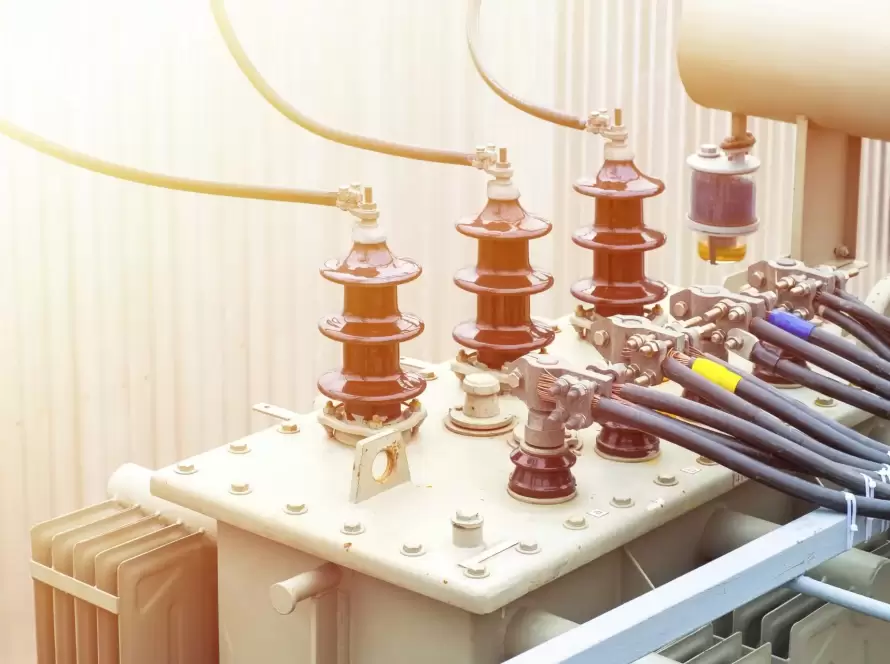
Pollution Levels (as per IEC/IEEE 60815-1 Standard)
The IEC/IEEE 60815-1 standard defines four general pollution severity levels:
| Pollution Level | Description | Equivalent Specific Creepage Distance (mm/kV) |
|---|---|---|
| Light | Areas with low industrial pollution, occasional rain | ≥16 |
| Medium | Areas with moderate pollution from industry, agriculture | ≥20 |
| Heavy | Areas with frequent condensation, high industrial pollution | ≥25 |
| Very Heavy | Coastal or desert areas with salt spray, conductive dust | ≥31 |
Note: Values are based on phase-to-ground voltage, not line-to-line voltage.
Important Considerations:
- Creepage Distance: To avoid flashovers, the bushing’s creepage distance (surface path from high voltage to ground) should match or exceed the requirement for the local pollution level.
- Type of Bushing: OIP (Oil Impregnated Paper), RIP (Resin Impregnated Paper), and RIS (Resin Impregnated Synthetic) bushings may respond differently to pollution.
- Maintenance: Regular cleaning or using hydrophobic coatings (e.g., RTV silicone) can improve performance in polluted environments.
Field Practice:
- Site assessment is crucial to determine pollution level using environmental maps, contamination studies, or service experience.
- Monitoring can include leakage current sensors or infrared cameras to detect problems early.
- Design adaptation may involve using longer creepage distances or sheds on bushings for very heavy pollution zones.